
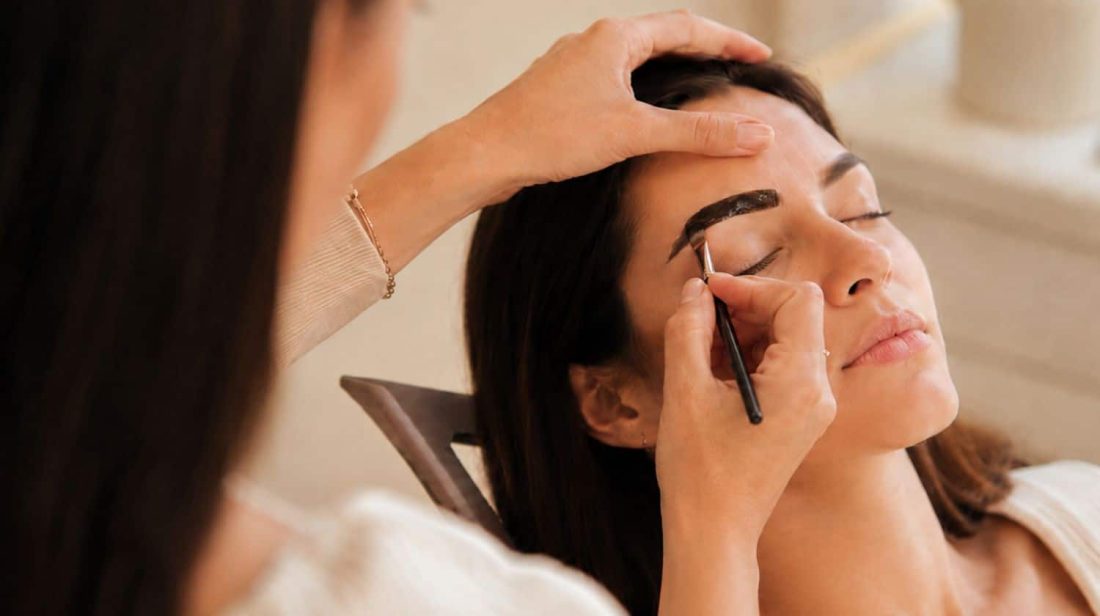
You leave your tint appointment with brows that look fuller, darker, and exactly where you wanted more definition. Somewhere around day four or five, you catch yourself in the mirror wondering if it already faded, or if you just imagined how dark it looked on day one. You didn’t imagine it, and you’re not doing anything wrong. Eyebrow tint fades in stages, and almost nobody explains that before you book.
We hear some version of this question almost every week at the studio. A client will come back for her next wax and mention, almost apologetically, that her tint “didn’t really take” this time, when really it did exactly what tint always does. The real answer depends on which part of the tint you’re looking at. The color sitting on your skin and the color sitting on your actual brow hair fade on two completely different clocks.
The deeper color sitting on your skin fades first. The tint on your actual brow hairs holds on for a full hair growth cycle.
Why the same tint fades at two different speeds
Eyebrow tint does two things at once. It stains your skin, which is what gives you that fuller, more defined look right after your appointment, and it colors the hair itself, which is the part that actually grows out with you. Skin renews itself constantly, shedding old cells and replacing them with new ones every week or two, so the stain on your skin fades on that same schedule. There is nothing you can do to stop that part. It is just how skin works.
Your brow hair doesn’t turn over nearly that fast. The color on the hair itself sticks around until that hair reaches the end of its own growth cycle and sheds naturally, which is a much longer process. So when a client tells us their tint “faded” after a week, what usually happened is the skin stain faded and the hair color is still doing its job quietly underneath. Look closely around week two and the hair itself is often still holding good color, just without that extra depth you noticed on day one.
Your natural coloring plays a part too. Clients with naturally light or fine brow hair tend to notice the fade sooner because there is less contrast to begin with, so even a small amount of fading looks more obvious in the mirror. Clients with naturally dark, coarse brow hair often barely notice the tint wearing off at all, because their own hair color is doing most of the work anyway. If you have blonde or red brow hair and feel like your tint never lasts as long as a friend’s does, that is a real difference, not something you are imagining or doing wrong.
What that actually looks like, week by week
Deepest color you’ll see. Skin stain and hair color are both at full strength, this is the fresh tint look you walk out with, and it often looks a shade or two darker than it will settle in a day or two.
Skin stain starts softening, faster if you exfoliate or use active skincare near your brows. The color on the hair itself barely moves during this stretch.
Skin stain is mostly gone for most people. Hair color is still strong, and honestly this stretch usually looks the most natural of the whole cycle.
Hair color starts fading as those hairs finish their growth cycle and get ready to shed. Time to book your next tint.
How to make it last as long as possible
A few habits genuinely change how long your tint holds, and most of them come down to what touches your skin in the first forty eight hours. None of this is complicated, it just means being a little more careful with your brows than usual for a couple of days.
- Skip face wash on your brows for the first few hours
- Use a gentle, oil free cleanser once you do wash
- Pat your brows dry instead of rubbing them
- Wear SPF on your face daily, sun fades tint fast
- Brush your brows into shape rather than scrubbing them
- Oil based cleansers, removers, and micellar water
- Retinol or exfoliating acids used near the brow
- Steam, saunas, and long hot showers early on
- Swimming in chlorinated water right after
- Picking at flaky skin instead of letting it shed on its own
Most of these come down to one simple idea. Anything that speeds up how fast your skin cells turn over will take the stain with it. That is exactly why retinol users tend to see their tint fade quicker than someone with a plain, gentle skincare routine. It is not a flaw in the tint, it is just chemistry doing what it does.
Eyebrow tint vs. henna vs. brow lamination
All three live on the same service menu and get mixed up constantly, so here’s where tint actually fits.
| Service | What it changes | Typical duration | Upkeep |
|---|---|---|---|
| Eyebrow Tint | Color only | 4 to 6 weeks on hair, 5 to 10 days on skin | Rebook every 4 to 6 weeks |
| Henna Brows | Color, plus a deeper skin stain for a fuller look | 2 to 3 weeks on skin, 4 to 6 weeks on hair | Rebook every 3 to 4 weeks |
| Brow Lamination | Shape and texture, not color | 4 to 6 weeks | Rebook every 4 to 6 weeks |
If you want more of that filled in, skin deep color, henna is usually the better call. We break that difference down further in our guide to eyebrow tinting and henna staining. If your brows are more about shape than color, lamination is solving a different problem entirely, and plenty of clients actually book both together since one changes shape and the other changes color.
How often should you get your eyebrows tinted?
Every four to six weeks lines up almost exactly with how long the hair color holds, so that’s the schedule most of our regulars settle into. Lighter or finer brow hair tends to show the fade sooner, so some clients come in closer to every three to four weeks instead. There’s no real downside to spacing it out further, either. Tint doesn’t stress your natural hair the way over processing a lash lift can, so it mostly comes down to how much fade you’re comfortable seeing before your next visit.
Still figuring out which brow service fits what you actually want? Our guide on choosing the right brow service walks through waxing, threading, lamination, and tinting side by side, so you’re not stuck guessing which one solves your actual problem.
We tint dozens of brows a week across our Santa Monica, Brentwood, and Austin studios, so we’ve gotten good at reading what a client’s skin and hair actually need instead of putting everyone on the same clock. If your tint keeps fading faster than it should, mention it to your artist. Sometimes it’s a skincare routine working against you, sometimes it’s just your skin type, and either way it’s usually an easy fix once we know what to look for.
Frequently asked questions
Does eyebrow tint fade faster on oily skin?
Yes. Oily skin sheds surface cells faster than normal or dry skin, so the stain on your skin can fade in under a week. The color on your actual brow hair isn’t affected by oil the same way and holds closer to the full four to six weeks.
Is henna longer lasting than regular eyebrow tint?
On the skin, yes, henna typically holds two to three weeks compared to five to ten days for standard tint. On the hair itself the two are close, usually four to six weeks either way.
Why does my tint look so much darker right after my appointment?
That is completely normal and expected. Fresh tint sits on top of the skin before it has had a chance to settle, so it usually looks a shade or two darker on day one than it will once it settles in over the following day or two. If you still feel like it is too dark after that, tell your artist at your next visit so they can adjust the formula for you.
Can I do anything between appointments once the color fades?
A tinted brow gel or a little brow powder can bridge the gap once the skin stain fades, without needing to rebook early.
Does washing my face a lot make eyebrow tint fade faster?
It can, especially with oil based cleansers or micellar water, which tend to lift tint off the skin faster than a gentle, oil free cleanser will.
How soon can I get my eyebrows tinted again?
Four weeks is usually the earliest we’d recommend, which gives the previous tint time to fully cycle out. Most clients land somewhere between four and six weeks.
Book eyebrow tinting at our Santa Monica, Brentwood, or Austin studio and we’ll match the shade to your natural color.


