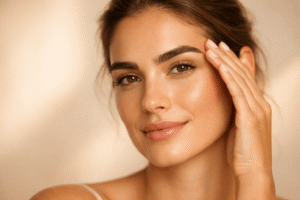
Most people pick their brow shape based on whatever is trending or whatever the last person on their Instagram feed was wearing. And honestly, that is how you end up with brows that look great on someone else and just okay on you. The shape that actually works is the one that matches your bone structure — your face shape, your proportions, where your features naturally sit. That is what this guide is for.
We have shaped thousands of brows across our three studios, and the single biggest difference between brows that look “fine” and brows that make someone’s whole face come alive is whether the shape was chosen for their specific face. Not a trend. Not a template. Their face.
So here is a straightforward breakdown — no fluff, just what works and why.
Why Face Shape Matters More Than Trends
Your eyebrows sit right above the most expressive part of your face. Their shape, thickness, and arch position affect how wide or narrow your face looks, how open your eyes appear, and whether your features feel balanced or slightly off.
A brow shape that works with your bone structure will make everything else look better without changing anything else about your routine. A shape that fights your structure — even if it is technically well-done — will always feel like something is not quite right. You might not be able to pinpoint it, but you will feel it.
The good news: once you understand which general direction works for your face, every appointment gets easier. You know what to ask for, your artist knows what to refine, and the results get better every time.
The right brow shape will not make you look like a different person. It will make you look more like yourself.
How to Figure Out Your Face Shape
Before we get into specific recommendations, you need to know your starting point. Pull your hair back, look straight into a mirror, and pay attention to three things: where your face is widest, the shape of your jawline, and whether your face is longer than it is wide or roughly even.
Width Tells You a Lot
If the widest part is at your cheekbones, you are probably oval or diamond. If it is at your forehead, likely heart-shaped. If your forehead, cheekbones, and jaw are all roughly the same width, you are looking at square or round.
Length Seals It
If your face is noticeably longer than it is wide, you have a long or oblong shape. If the length and width are close to equal with a soft jawline, that is round. Equal with an angular jaw? Square.
Do not overthink this. Most people can figure it out in about thirty seconds in front of a mirror. And if you are still not sure, your brow artist can tell you the moment you sit down — it is literally the first thing we assess before touching a single hair.
Round Face
Round faces are widest at the cheeks, with a soft jawline that curves rather than angles. The forehead and jaw are roughly the same width, and the overall proportions are close to equal in length and width. Think full, soft, and symmetrical.
A brow with a defined arch — not extreme, but noticeable. The angle creates vertical lines on your face, which adds dimension and prevents everything from reading as uniformly round. The arch gives your face a visual “lift” that balances the width at your cheeks.
Flat, straight brows with no arch at all. They follow the circular shape of your face instead of breaking it up, which can make your face look wider than it is. Also avoid super thin brows if you have a fuller face — thicker brows hold their own better against wider proportions.
A brow wax with a skilled artist can define that arch cleanly without making it look sharp or overdone. The key is placement — the highest point of the arch should sit roughly above the outer edge of your iris, not dead center of the brow.
Oval Face
Oval is the most proportional face shape — slightly longer than it is wide, widest at the cheekbones, with a forehead that is a bit wider than the jaw. If your face shape is oval, you basically won the brow lottery.
Almost everything. Oval faces are balanced enough that they can pull off soft arches, straight brows, angled brows, thick, thin — the range is wide. The one shape that tends to look best is a soft, medium-thick brow with a gentle arch. It maintains the natural balance of the face without adding angles or width where you do not need them.
The risk with oval faces is actually overdoing it. Because so many shapes work, it is tempting to go dramatic — a high arch, super thick, very sculpted. But the face shape is already balanced, so heavy-handed shaping can throw off what was already working. Keep it simple and let your natural shape do most of the talking.
If you have an oval face and you are not sure what to do, ask your brow artist to simply clean up your natural shape without changing the architecture. Nine times out of ten, your natural brow is already close to perfect — it just needs tidying.
Heart-Shaped Face
Heart-shaped faces are wider at the forehead and temples and narrower at the chin. The forehead is the dominant feature, and the jawline tapers to a point or a soft angle. This face shape can sometimes feel “top-heavy” when brow shapes add even more width to the upper half.
A rounded, soft arch with medium thickness. The curve draws attention to the center of the face and away from the wider forehead, which helps balance the proportions. Keep the brow full but not blocky — you want it to feel soft, not structured.
Very straight, flat brows. They emphasize the horizontal width of your forehead, which is exactly what you do not want. Also avoid super sharp or high arches — they can make the face look top-heavy and draw attention upward instead of toward the eyes.
This is a face shape where the difference between a good brow shape and the right brow shape is really visible. Even small adjustments to the arch height or the thickness at the front of the brow can completely change the balance. This is worth getting done professionally rather than DIY-ing it.
Square Face
Square faces have a forehead, cheekbones, and jawline that are all roughly the same width, with a jaw that is angular and defined rather than rounded. Strong, structured features are the hallmark of this shape.
A curved, slightly higher arch. The curve introduces softness into a face that is naturally angular, and the height gives the face a longer, more open appearance. Think of the brow as the counterpoint to the jawline — where the jaw is sharp, the brow should be gentle.
One thing that works surprisingly well on square faces: thicker brows. The fullness balances the strong jaw and prevents the brow from looking too delicate against bold features. If you have been keeping your brows thin, try letting them fill out and see how it changes the overall effect.
Keep in mind that the tail of the brow matters here too. If the tail drops too low, it can drag the eye down and make the whole face feel heavy. A slight upward taper at the end keeps everything lifted. This is one of those details that a good brow shaping appointment will catch that you would probably miss on your own.
Diamond Face
Diamond faces are narrow at the forehead and chin, with cheekbones that are the widest point of the face. It is a striking shape, but the narrow forehead can sometimes make the face feel top-light compared to the prominent cheeks.
Curved brows with a soft angle. The curve adds visual width to the forehead, which balances out the cheekbones. A gentle arch — not too high, not too sharp — gives structure without making the narrow forehead feel even smaller. Keep the front of the brow slightly fuller to add weight to the upper face.
Diamond faces often look amazing with current eyebrow trends that favor natural texture and feathered edges. The softness of feathered brows complements the angular cheekbones without competing with them.
Long (Oblong) Face
Long faces are noticeably longer than they are wide, with a forehead, cheekbones, and jaw that are all similar in width. The goal with brow shaping on a long face is to create the illusion of width — to make the face appear broader and less elongated.
Flat or low-arched brows. This is the one face shape where a straighter brow is almost always the right call. Horizontal lines make the face look wider, which is exactly what you need. Keep the brow extended slightly beyond the outer corner of the eye to maximize that widening effect.
High arches. They add vertical height to a face that is already long, which just exaggerates the length. If you naturally have a high arch, your brow artist can soften it without flattening it completely — bringing it down even slightly makes a noticeable difference.
Thicker brows also work really well on long faces. The fullness creates a strong horizontal line across the upper face that visually shortens the proportions. If your brows are naturally thin, a tint can help them appear denser without adding pencil every morning.
A Few Things That Apply to Everyone
No matter what face shape you have, these basics are universal.
Your brows are supposed to be sisters, not twins. Perfect symmetry is not the goal — and honestly, truly identical brows can look artificial because no face is perfectly symmetrical either. Getting them close and balanced is what matters.
The front of your brow should start roughly above the inner corner of your eye. The arch should peak somewhere above the outer edge of your iris. The tail should end along a line from your nostril through the outer corner of your eye. Those three points are a starting framework — your artist will adjust from there based on your specific proportions.
And if you are pairing a brow service with a lash lift, tell your artist upfront. The two services work together, and your artist may adjust the brow shape slightly to complement how the lash lift opens up the eye area. The combination is one of the most-requested pairings we do, and for good reason — both services frame the eye, so getting them done together creates a more cohesive result.
Not sure where to start?
Come in for a shaping session. Your artist will assess your face shape, talk through the options, and shape your brows based on what will actually work best for you.
Our Studios
Personalized brow shaping based on your face — not a template.